


15 Gennaio 2026
Al cuore del codice: Clean Architecture vs Architettura a strati
10 Novembre 2023
Naviga nel cuore del codice con il confronto tra Clean Architecture e Architettura a Strati, essenziale per ogni Sviluppatore. Questa guida ti aiuterà a scegliere l’architettura ideale per i tuoi prossimi progetti, considerando complessità, testabilità e scalabilità.

Nel vasto mondo dello sviluppo software, la scelta dell’architettura è la chiave per garantire la longevità e l’efficienza di un sistema.
Due approcci di progettazione ampiamente discussi sono la clean architecture, proposta da Robert C. Martin (spesso chiamato Uncle Bob), e l’architettura a strati.
Questi due modelli offrono approcci diversi nella creazione di sistemi complessi e rappresentano entrambi approcci architetturali validi e ampiamente utilizzati oggi nel campo del software engineering.
Indice
- Navigando il labirinto: introduzione all’architettura del software
- Un confronto: Clean Architecture vs. Architettura a Strati
- Conclusione: uscire dal labirinto delle scelte architetturali
Navigando il Labirinto: introduzione all’architettura del software
L’introduzione all’architettura del software ci porta nel cuore della progettazione dei sistemi informatici, guidati dal ruolo chiave dell’architetto del software. Questo professionista assume il compito cruciale di definire i requisiti strutturali e funzionali, orchestrando strategicamente gli elementi per garantire una struttura coesa, facilmente scalabile e gestibile nel tempo.
Le decisioni architetturali, vitali per la qualità, l’affidabilità e le prestazioni del sistema, giocano un ruolo fondamentale nella scalabilità, manutenibilità ed estensibilità del sistema. Una buona architettura mira a:
- Separare le responsabilità in modo chiaro e ben definito, assicurando che ogni componente abbia funzioni distinte senza interferenze reciproche.
- Isolare il codice da influenze esterne, consentendo la sostituzione o l’aggiornamento delle tecnologie senza impattare il resto del sistema.
- Favorire l’esecuzione di test automatizzati, facilitando lo sviluppo di software affidabile e di alta qualità.
- Semplificare l’organizzazione e la gestione del codice, garantendo flessibilità e adattabilità alle esigenze del progetto.
Ci sono diverse vie architetturali da esplorare, ciascuna con le proprie peculiarità e sfide. In questo articolo, ci concentreremo su due di esse: l’architettura a strati e la clean architecture. Insieme, esamineremo approfonditamente vantaggi e svantaggi di entrambe.
Continua a leggere per scoprire perché adottare uno stile architetturale può fare la differenza. Se invece ti interessano i pattern per lo sviluppo Front-End, leggi l’articolo del collega frontendista!
Scelte Architetturali: Perché sono Importanti?
Impegnarsi nell’adozione di un approccio architetturale per la progettazione e lo sviluppo del software rappresenta una pratica ampiamente consigliata, se non imprescindibile, all’interno del vasto panorama dell’industria del software.
I motivi dietro questa raccomandazione risiedono nei numerosi vantaggi derivanti dall’implementazione di un’architettura ben definita e pianificata. Esaminiamo insieme le ragioni fondamentali che rendono questa decisione così cruciale!
- Miglior struttura del codice: un approccio architetturale ben definito crea una base solida e organizzata per il software, migliorando la sua comprensibilità e agevolando la manutenzione a lungo termine, riducendo gli errori e semplificando le attività di debugging.
- Facilita la collaborazione: l’architettura chiara offre a tutti i membri del team una comprensione condivisa delle responsabilità e delle interazioni tra i componenti del sistema, creando un ambiente di lavoro più efficiente e produttivo.
- Scalabilità: un’architettura ben definita permette l’aggiunta agevole di nuove funzionalità o moduli, consentendo al software di adattarsi ai cambiamenti e crescere organicamente nel tempo.
- Manutenibilità: le modifiche sono inevitabili nella vita di un’applicazione software, e un’architettura ben strutturata facilita di molto l’implementazione di modifiche nel tempo, mantenendo il software allineato alle esigenze in evoluzione degli utenti e delle esigenze aziendali.
- Testabilità: un’architettura ben strutturata favorisce la creazione di test automatizzati efficaci, garantendo la qualità del software e facilitando la tempestiva individuazione di problemi o bug.
- Gestione dei rischi tecnici: un approccio architetturale consente di identificare e gestire i rischi tecnici fin dall’inizio, evitando costosi problemi e ritardi nel ciclo di sviluppo e agevolando l’integrazione con sistemi esterni o servizi.
- Prolungamento della vita utile del software: un’architettura ben sviluppata permette di apportare aggiornamenti e modifiche senza dover riscrivere l’intero sistema, garantendo che il software rimanga rilevante e funzionale nel lungo periodo.
Ora, vediamo in dettaglio i due principali approcci all’architettura del software: la clean architecture e l’architettura a strati.
Un confronto: Clean Architecture vs. Architettura a Strati
Vediamo ora in dettaglio I due approcci chiave all’architettura del software: la clean architecture e l’architettura a strati.
A seguire, esamineremo le differenze essenziali tra questi due modelli, analizzando i loro vantaggi e svantaggi per aiutarti a prendere decisioni più informate durante la progettazione dei tuoi sistemi software. Ricorda che, se hai bisogno di aiuto, puoi sempre scrivere a Ulixe per il nostro supporto professionale!
La Clean Architecture: Ordine nel Caos
La clean architecture, introdotta da Robert C. Martin, è un paradigma di progettazione software focalizzato sulla separazione delle responsabilità all’interno di un sistema informatico. Uncle Bob, ha introdotto questa struttura per promuovere modularità, testabilità e manutenibilità del codice.
La caratteristica distintiva dell’architettura clean è la sua indipendenza dalle tecnologie specifiche utilizzate nell’implementazione, organizzando il sistema in cerchi concentrici: Entity, Use Cases, Interface Adapters e Frameworks/Drivers. Vediamoli insieme.
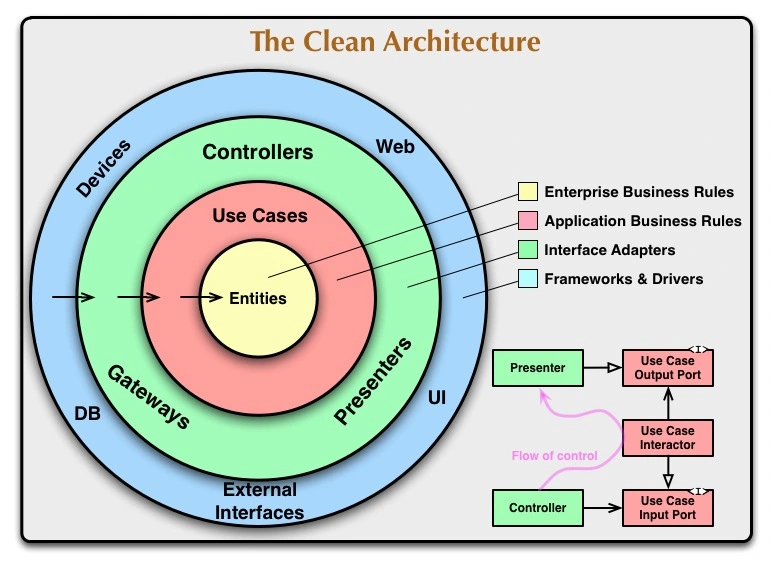
Struttura della clean architecture
Fonte: Cleanercoder
- Entità
Le entità racchiudono le regole aziendali a livello di business. Un’entità può essere un oggetto con metodi o un insieme di strutture dati e funzioni. Non importa, purché le entità possano essere utilizzate da molte applicazioni diverse nell’azienda.
- Casi d’Uso
Il software in questo livello contiene regole aziendali specifiche dell’applicazione. Incapsula e implementa tutti i casi d’uso del sistema, orchestrando il flusso di dati da e verso le entità e guidando queste entità nell’uso delle loro regole aziendali per raggiungere gli obiettivi del caso d’uso.
- Interface Adapters
Il software in questo livello è composto da adattatori che convertono i dati dal formato più conveniente per i casi d’uso e le entità al formato più conveniente per agenzie esterne come il Database o il Web.
- Framework e Driver
Il livello più esterno è generalmente composto da framework e strumenti come il Database, il Web Framework, ecc. In genere, non si scrive molto codice in questo livello, tranne il codice di collegamento con il cerchio successivo verso l’interno.
La clean architecture è quindi una scelta ideale per progetti in cui l’evoluzione delle tecnologie è una preoccupazione gestionale, poiché fornisce un’eccellente isolazione dalle influenze esterne. Con un’organizzazione basata sul modello della clean architecture, si ottiene la flessibilità necessaria per aggiungere nuovi moduli senza dover riscrivere l’intero sistema. Non male, vero?
In sintesi, la clean architecture di Robert C. Martin è particolarmente adatta per progetti complessi e di lunga durata, come sistemi di gestione aziendale o piattaforme di e-commerce su larga scala con un grande volume di utenti o transazioni
Vediamo nel dettaglio i pro e i contro di questo approccio architetturale software.
Vantaggi che rendono la Clean Architecture una scelta saggia
- Separazione delle responsabilità: la clean architecture promuove una chiara separazione delle responsabilità tra i diversi componenti del sistema. Ciò rende il codice più comprensibile, facilitando la manutenzione e la modifica futura.
- Indipendenza dalle tecnologie: gli elementi all’interno della clean architecture sono completamente isolati dalle tecnologie specifiche utilizzate. Ciò permette di sostituire o aggiornare le tecnologie senza dover modificare il resto del sistema, garantendo la durata a lungo termine dell’applicazione e la sua scalabilità.
- Testabilità migliorata: grazie alla separazione delle responsabilità e all’indipendenza dalle tecnologie, la clean architecture favorisce l’esecuzione di test automatizzati, facilitando lo sviluppo di software affidabile e di qualità.
- Facilità di Manutenzione: la separazione chiara delle responsabilità facilita la manutenzione continua e l’aggiornamento del sistema nel tempo, riducendo il rischio di effetti collaterali indesiderati.
Scommessa sicura o mossa rischiosa? Svantaggi da considerare
- Complessità iniziale: l’implementazione della clean architecture richiede una pianificazione e una progettazione iniziale più approfondite rispetto ad altri approcci e la definizione delle cerchie concentriche e delle relazioni tra i componenti può aumentare la complessità del sistema.
- Curva di apprendimento: la clean architecture richiede una conoscenza approfondita dei principi e delle pratiche ad essa associati. Gli sviluppatori potrebbero dover acquisire nuove competenze e adattarsi a un nuovo modo di pensare per implementare correttamente questa architettura.
Architettura a strati: semplicità nell’organizzazione
L’architettura a strati nel software è come organizzare un sistema in diversi livelli, ognuno con un compito specifico. Puoi immaginarli come strati di un hamburger, dove ogni strato ha un ruolo specifico. Questi strati collaborano tra loro, creando una struttura che facilita la gestione e lo sviluppo del software. Ad esempio, ci potrebbe essere uno strato per l’aspetto visivo, uno per la logica operativa e uno per accedere ai dati del sistema.
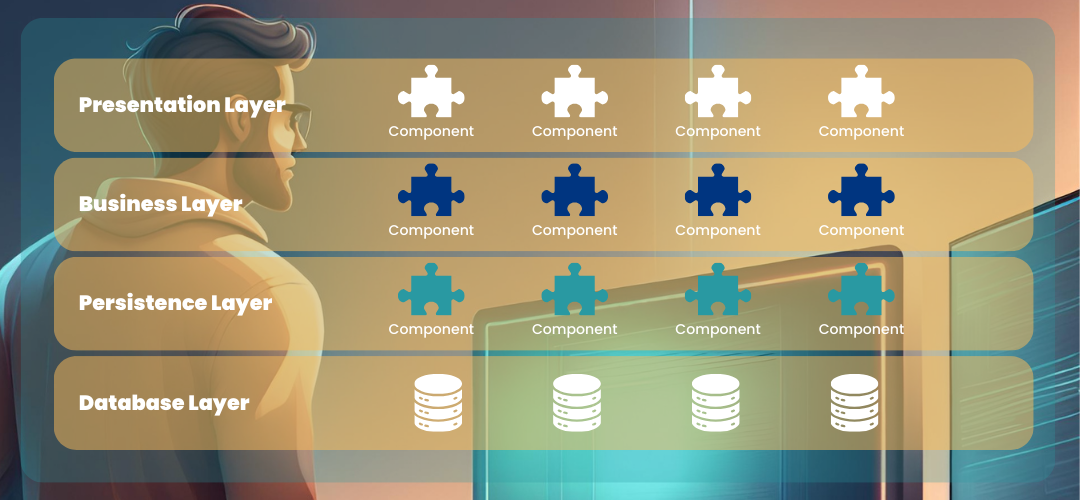
L’architettura a strati è spessola scelta naturale per applicazioni di piccole e medie dimensioni, come siti web aziendali, blog o app mobili semplici. La sua semplicità concettuale è adatta per progetti con requisiti meno complessi.
Se il team ha risorse limitate in termini di tempo e competenze, l’architettura a strati può essere più accessibile e veloce da implementare. È ampiamente adottata nell’industria, con molte risorse disponibili per supportarla.
Per progetti con un ciclo di vita previsto breve, come un’app di giochi mobile o un’applicazione promozionale, l’architettura a strati può essere una scelta pragmatica. La sua semplicità consente lo sviluppo rapido e il rilascio dell’applicazione. Inoltre, se il progetto non richiede integrazioni complesse con sistemi esterni o servizi, questa architettura può essere sufficiente per gestire le operazioni di base.
La scelta tra clean architecture e architettura a strati dipende dalla complessità, dalle esigenze di testabilità, dalle prospettive di evoluzione tecnologica, dalle dimensioni del progetto e dalle risorse disponibili. Puoi anche considerare l’idea di adottare una variante o un ibrido di questi approcci per adattarti meglio alle specifiche necessità del tuo progetto.
Strati essenziali: vantaggi della struttura a strati
- Semplicità concettuale: l’architettura a strati è un modello intuitivo e di facile comprensione. La separazione dei componenti in strati distinti semplifica l’organizzazione e la gestione del codice.
- Ampia adozione: l’architettura a strati è ampiamente utilizzata nell’industria dello sviluppo software. Ciò significa che ci sono molte risorse, framework e best practice disponibili per supportare questa architettura.
- Scalabilità orizzontale: grazie alla sua struttura modulare, l’architettura a strati può agevolare la scalabilità orizzontale, consentendo l’aggiunta di risorse per gestire un aumento del carico di lavoro.
Esplorando gli svantaggi tra le maglie
- Dipendenza tra gli strati: nell’architettura a strati, gli strati inferiori dipendono dagli strati superiori, creando una dipendenza diretta. Questo può rendere il codice più difficile da testare, manutenere e modificare senza influire sugli altri strati.
- Rigidezza: l’architettura a strati può diventare rigida quando è necessario apportare modifiche significative al sistema. A volte, l’aggiunta o la modifica di una funzionalità richiede di agire su più strati rendendo il processo di sviluppo meno flessibile e più complesso.
Conclusione: uscire dal labirinto delle scelte architetturali
Entrambi gli approcci, clean architecture e architettura a strati, rappresentano valide opzioni nella progettazione dei sistemi software. La decisione tra i due dipende dal contesto e dai requisiti specifici del progetto.
In breve, la clean architecture offre maggiore separazione delle responsabilità e indipendenza tecnologica, potenziando la testabilità e la manutenibilità, ma richiede una pianificazione più dettagliata. In contrasto, l’architettura a strati è concettualmente più semplice, ampiamente utilizzata, ma può essere meno flessibile con dipendenze tra gli strati.
È importante notare che non tutte le organizzazioni seguono rigorosamente un approccio architetturale in ogni situazione. Fattori come scadenze stringenti o progetti di piccole dimensioni possono influenzare la tendenza a trascurare l’architettura per favorire la velocità di sviluppo. La disponibilità di competenze nel team è altresì determinante nella decisione di adottare un’architettura specifica.
In conclusione, l’adozione di un approccio architetturale è considerata preziosa, specialmente per progetti di medie e grandi dimensioni o a lunga durata. Tuttavia, la scelta di seguire un’architettura specifica dipenderà sempre dalle circostanze e dalle esigenze uniche di ciascun progetto.
Grazie per essere arrivato fino a qui! Continua a seguirci.